

Non classé
Educational Games for Children: Learning Through Play at Home
May
Let’s be honest— in today’s world of screens, video games, and ever-present social media, it’s not always easy to find engaging educational activities that truly capture children’s attention. Between tablets, phones, and gaming consoles, screens often take up a big part of their daily lives. And let’s face it, competing with that isn’t always simple!
But there is a simple and effective alternative: educational games for children.
These learning activities allow kids to learn while having fun. Even better, they stimulate curiosity, imagination, and critical thinking. The best part? Learning happens naturally, without pressure—and children absolutely love that!
But that’s not all. Educational games also help bring families together. These fun and creative activities allow parents, children, and even grandparents to share meaningful moments. You laugh, you connect, and you learn together.
So if you’re looking for simple ideas to learn through play and enjoy quality family time, you’re in the right place!
What Is an Educational Game?
Before choosing an activity for your child, it’s important to understand what an educational game actually is. Not all games have the same purpose. Some are purely for entertainment, while others are designed to stimulate a child’s cognitive development and learning abilities.
In simple terms, an educational game combines fun and learning.
Through playful activities, children naturally develop key skills such as memory, logic, language, and creativity. Learning through play helps them retain information more effectively because they are actively engaged and emotionally invested.
This is exactly what makes educational games so valuable in child development—without the need for screens.
Related reading: How to organize a home escape game?
How Can Play and Learning Be Combined Easily?
Through fun learning activities, children naturally build many essential skills over time. Memory, reasoning, language, and creativity are all strengthened through regular play.
Learning through play also helps children absorb information more effectively because they are motivated and involved.
Examples of educational activities:
- A learning walk in a botanical garden
- Memory games at home
- Creative drawing with simple rules
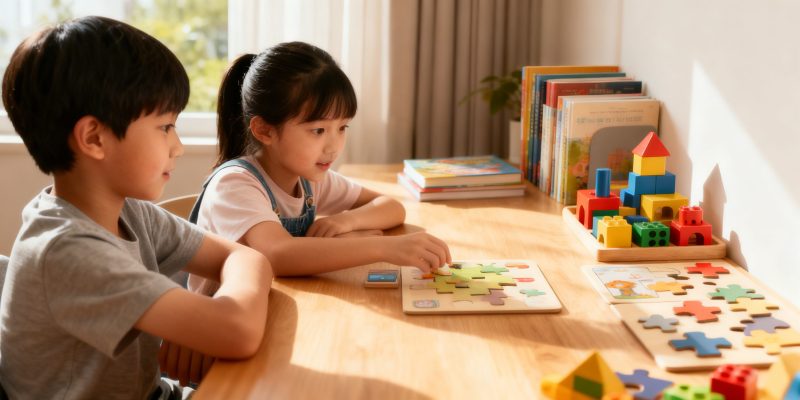
- Puzzles to develop logic
- Imaginative storytelling activities
- Role-playing games to build confidence
- Treasure hunts with clues and riddles
Most importantly, learning through play reduces pressure. Children progress at their own pace while enjoying small, age-appropriate challenges.
Benefits of Educational Games for Kids
Learning While Having Fun
Educational games still play a major role in childhood learning today. Playing is not just entertainment—it’s a natural way to explore the world and develop new skills. Even if children don’t realize it, their brains absorb a huge amount of information during play-based learning.
Developing Key Skills Through Play
From an early age, children learn by observing, manipulating, and experimenting. These skills are reinforced both at school and at home.
Educational games help to:
- Improve concentration
- Strengthen logical thinking
- Encourage independence
- Develop creativity
- Support communication skills
By reducing screen time, children naturally become more aware of their environment and more engaged in real-world experiences.
Examples include:
- Memory games
- Creative drawing activities
- Puzzles
- Story creation
- Role-playing games
- Treasure hunts with riddles
Types of Educational Games for Children
There are many different types of educational games available today. Each one targets specific skills such as language development, logic, creativity, or early math concepts.
Some games focus on letters and numbers, while others encourage imagination or problem-solving. This variety is important to keep children motivated and curious.
How to Choose the Right Educational Game
Choosing the right game can sometimes feel overwhelming due to the wide variety available. However, a few simple criteria can help:
- Age appropriateness: the game should match the child’s developmental level
- Enjoyment first: learning only works if the child enjoys the activity
- Learning goal: consider what skill the game develops
Tip: second-hand shops and online resale platforms are great for finding affordable educational games.
Easy Educational Games to Do at Home
The good news? You don’t always need to buy anything. Many educational activities can be created using everyday household items.
These simple games help children think, focus, solve problems, and structure their thinking.
Simple Home Learning Games:
- Sorting objects: by color, shape, or size
- Logic sequences: continue patterns (red, blue, red…)
- Homemade maze: drawn on paper or built with objects
- Building games: LEGO, Kapla, or household items
- Odd one out game: identify the item that doesn’t belong
Creative Educational Games at Home
The Secret Mission Game
Turn your child into a little detective! Create a treasure hunt with hidden clues around the house. Each clue includes a riddle or challenge to solve.
Examples:
- Logic puzzles
- Riddles
- Word decoding
At the end, you can offer a small reward or surprise. This game builds logic, persistence, and problem-solving skills while creating an exciting adventure.
The Object Transformation Game
This ultra-simple but highly creative game uses everyday objects.
Ask your child:
“What else could this object become in a story?”
Examples:
- A spoon becomes a rocket
- A box becomes a house
- A sock becomes a character
Then build a story together using these transformed objects. This activity boosts imagination, creativity, and language skills.
Educational Games: Learning Through Everyday Life
Educational games show that learning can be simple, natural, and fun. When children explore the world through play, they develop essential skills for the future.
Each activity becomes an opportunity to think, create, and discover. These shared moments also strengthen family bonds.
Making Educational Games a Daily Habit
Educational games are much more than simple activities to keep children busy. They support learning, creativity, and essential skill development in a natural and enjoyable way.
With just a little creativity and simple materials, everyday moments can become powerful learning experiences.
Whether at home, during holidays, or family time, educational games help children grow while strengthening parent-child relationships.
Most importantly, the joy of playing should always come first—because when children have fun, they learn effortlessly.

More Ideas & Activities
You may also like:
- Top 10 last-minute games for kids
- How to create a birthday treasure hunt
- Top 20 screen-free games for kids
All games from amedenfant.fr and printableadventuregames.com are protected by intellectual property rights and registered with INPI (French National Institute of Industrial Property).